Kentucky drivers are the dumbest drivers in the world.
Driving in and around Louisville is way too stressful. Most drivers lack situational awareness and put themselves in a situation where they’re holding up traffic and won’t let you pass. And even worse, they realize at the last minute where they are and suddenly swerve, making themselves a danger not only to themselves, but everyone else around them.
At least back in Massachusetts, they really mean it when they try to run you off the road.
If you aren’t prepared for what life can throw at you, you may be in for a great fall.
As I’m sure everyone understands all too well by now, life has a way of throwing monkeywrenches into the system. If there’s anything that’s been consistent about 2020, it’s that every month seemingly has a new surprise to spring upon humanity.
Instead of traveling over smooth ground, we are on precipitous terrain. Any kind of long term forecast is currently impossible.
When chaos is the order of the day, you must be able to make and act on snap judgements without overcommitting on your previous decision. How do you do that?
Right now the world is practically at a standstill in self-quarantine against the Coronavirus. While some people may be working remotely, a lot of businesses are actually closed for operation. A lot of people are out of work right now, and there’s no guarantee they’ll have a job when the pandemic eventually passes.
As I was folding my laundry tonight, I was thinking about everything that’s happened over the past few days, at the national level, but more importantly what was going around me in my local city. And some things aren’t adding up.
(As I’m writing this, President Trump has just declared a national emergency over the spread of COVID-19, aka the Coronavirus. It’s been only a few days since major sporting events were suspended and cancelled, most notably the NBA and March Madness. So I don’t know right now how things are going to play out over the next few weeks or months.)
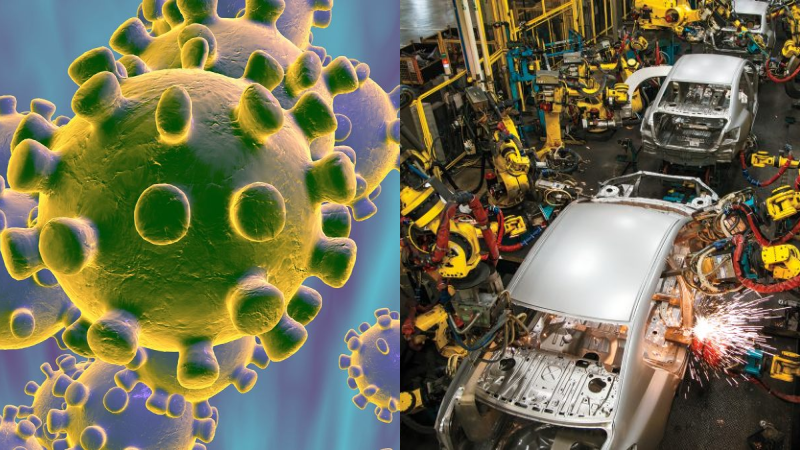
Over a decade and a half ago, I used to be a manufacturing engineer in the automotive industry. One of my regular duties was to conduct something called an FMEA, Failure Modes Effects and Analysis. It was a risk assessment over what could possibly go wrong in a car (or a component of it), which guided what type of preventive measures and quality checks had to happen.
The Big Three automakers had a pretty standard system: there were three measures, rated on a scale from 1 to 10. You multiply the three numbers to get anything between 1 and 1 thousand. The bigger the number, the bigger the risk. If it was something under a hundred, you almost didn’t think about. However, if it was close to a thousand, it was all hands-on-deck, the-company-could-go-out-of-business bad.
These were the three measures: severity (what’s the worst case), occurrence (how often does it happen), and detection (how quickly can it be spotted).
I’m going to add in a fourth factor to the calculation: contagion. The automotive FMEA doesn’t account for this, because when a tire blows out on one Ford Explorer, it doesn’t cause three or four other Explorers to crash. So now our scale goes from one to ten thousand.
In thinking about the virus, I decided to apply my FMEA math. So let’s go:
(Disclaimer, I’m going to throw out some numbers, but all of these are second-hand with no references. This is a thought experiment, not a policy paper.)
If this doesn’t give you a sick feeling in your stomach, it should.
Seven years ago I received a rude awakening.
My workplace at the time was having a wellness screening, which I participated in. When the results came back, I was diagnosed as being at risk for Type 2 diabetes. Furthermore, my blood pressure was abnormally high, as was my cholesterol.
My health is a lot better now, but to get out of the danger zone, I had to make a lot of drastic changes.
Last week, a classmate from high school reached out to me. He’d been a journalist for about thirty years, but he was starting to see the writing on the wall. (Spoiler alert: print journalism is dying.) He was asking me for advice about jumping ship from journalism and going into technology.
I won’t go into details about what I told him, but I will tell you the principle I approached to his problem. I told him to start with what he was good at. While I’m sure he was looking for advice about getting into coding, what he really wanted to know was, how to reinvent yourself when you find you’re in a career dead end.
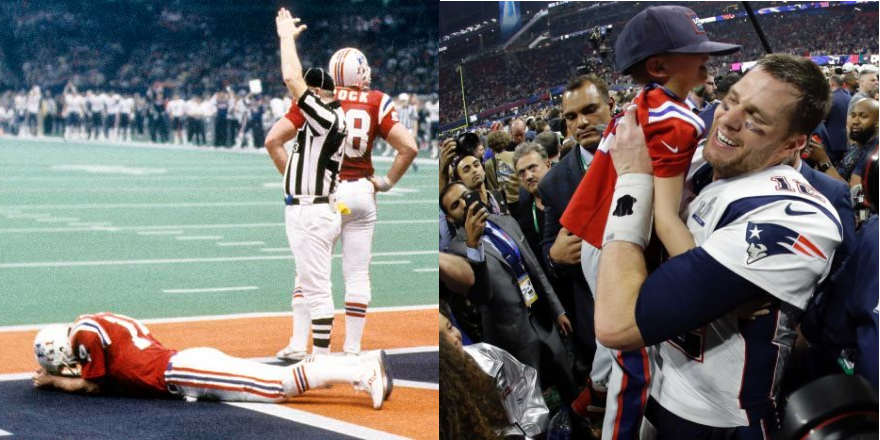
New England Patriots in the Super Bowl: then and now
I was in high school when the Patriots made their first Super Bowl appearance in 1986. The Pats finished 11-5 in the regular season under second-year coach Raymond Berry and veteran quarterback Steve Grogan. It was the best regular season finish by New England to that point. They then made an improbable wild-card run through the playoffs and beat Miami in the AFC championship to advance to Super Bowl XX and face the Chicago Bears. Having just “squished the Fish,” confidence was running high in New England that the Patriots would “Berry the Bears.”
Not too soon after 2019 began, a new meme emerged on Facebook: How hard did aging hit you? People were challenged to post their very first Facebook profile picture, followed by their current picture.
I normally ignore Facebook challenges, but I have an interesting story to tell.
Friday was supposed to be a day off, the first day of a three-day weekend. Instead, I ended up not only coming into the office, but working well past midnight. Saturday, I paid for it.
I woke up well after the sun had risen and spent most of the day mindlessly doing useless crap. I’m at that age where if I have a particularly late night, it takes me about 3-4 days for things to settle back to normal. So, a three-day weekend where I was hoping to work on my side hustle, has become one day back at the office, followed by two days of recovery.
Watson Park – Merrimack, NH. This used to be an abandoned factory when I lived here.
Earlier in September, I flew back to New Hampshire for my high school reunion. It had been a full decade since I was back in my home town, and altogether I have only returned back to New Hampshire only six times since graduating college, with the gap in time between each successive visit growing longer than the previous one.