Who’s the Boss?

I learned the difference between being responsible and being accountable long before I ever worked with data. I hadn’t yet turned 23 when I arrived at my first duty assignment as a newly-minted lieutenant. I was the battalion chemical officer, responsible for contingency plans if weapons of mass destruction were ever used. Part of my responsibility was inventorying and maintaining the detection and decontamination equipment for a unit of 400 men. This included some very advanced electronics with low-radioactive isotopes. In today’s dollars all of it could be worth well over a million dollars. If something happened to that equipment, my career was on the line.

I saw the same lesson play out again when I was a manufacturing engineer. In manufacturing, the plant manager owns the line. If scrap rates climb or a shipment misses its window, the conversation starts and ends with that person. The process engineers, the quality technicians, and the operators on the floor are the ones who actually change the set points, quarantine the bad parts, and rewrite the work instructions. They are responsible for the work. The manager is accountable for the result.

Data isn’t any different, though looking at most corporate data org charts, you’d think we were all stuck in a mid-80s Tuesday night primetime loop—constantly asking, “Who’s the boss?” line-item by line-item while Tony Micelli and Angela Bower debate who actually holds the title.

Continue reading “Who’s the Boss?”


The Top Line

AI image generated by Grok

A few years ago I asked a vice president how the business intelligence team I was on actually proved its value. His answer was straightforward: we made it easier for directors and executives to see the current state of the business and judge what was possible next.

That discussion stuck with me because it was so different from how most foundational work gets discussed. Data architecture, data governance, and the unglamorous parts of IT hygiene rarely get described in terms of decision quality or growth optionality. They get described as cost centers. When something is only a cost, the rational move is to minimize it, defer it, and hope the problem stays quiet.

The past few days of widespread vulnerabilities—especially the critical PHP issues that affected a large share of the web—made the pattern obvious again. Plenty of people have pointed out that basic patching, asset management, and maintenance were underfunded for years. The harder observation is why. Work that leadership can’t clearly connect to top-line outcomes tends to lose the budget fight, even when everyone agrees it is important in the abstract.

Continue reading “The Top Line”

Going to Gemba

Source: Motor Trend (http://www.motortrend.com/news/miles-in-three-2013-honda-accords/)

In my past life before data architecture, I used to be a manufacturing engineer in the automotive industry. At the time, the popular approach was Lean Manufacturing and the Toyota Production System, driven by Toyota’s massive success in the United States.

Lean was—and still is—about increasing value to the customer by reducing and eliminating work that doesn’t add meaningful value. This spawned many tools and practices to surface inefficient habits. One that stayed with me was the concept of “going to gemba.” In Japanese, gemba means “the real place” where work actually happens. In practice, this meant that managers and engineers left the office and went to the shop floor. There they simply observed: stood and watched the work happening, and asked questions of the line operators in a curious and respectful manner. No decisions were made on the floor. Leadership took what they had learned back to the office and used those lessons to shape operational plans.

This concept came to mind as I read this post on LinkedIn:

Continue reading “Going to Gemba”

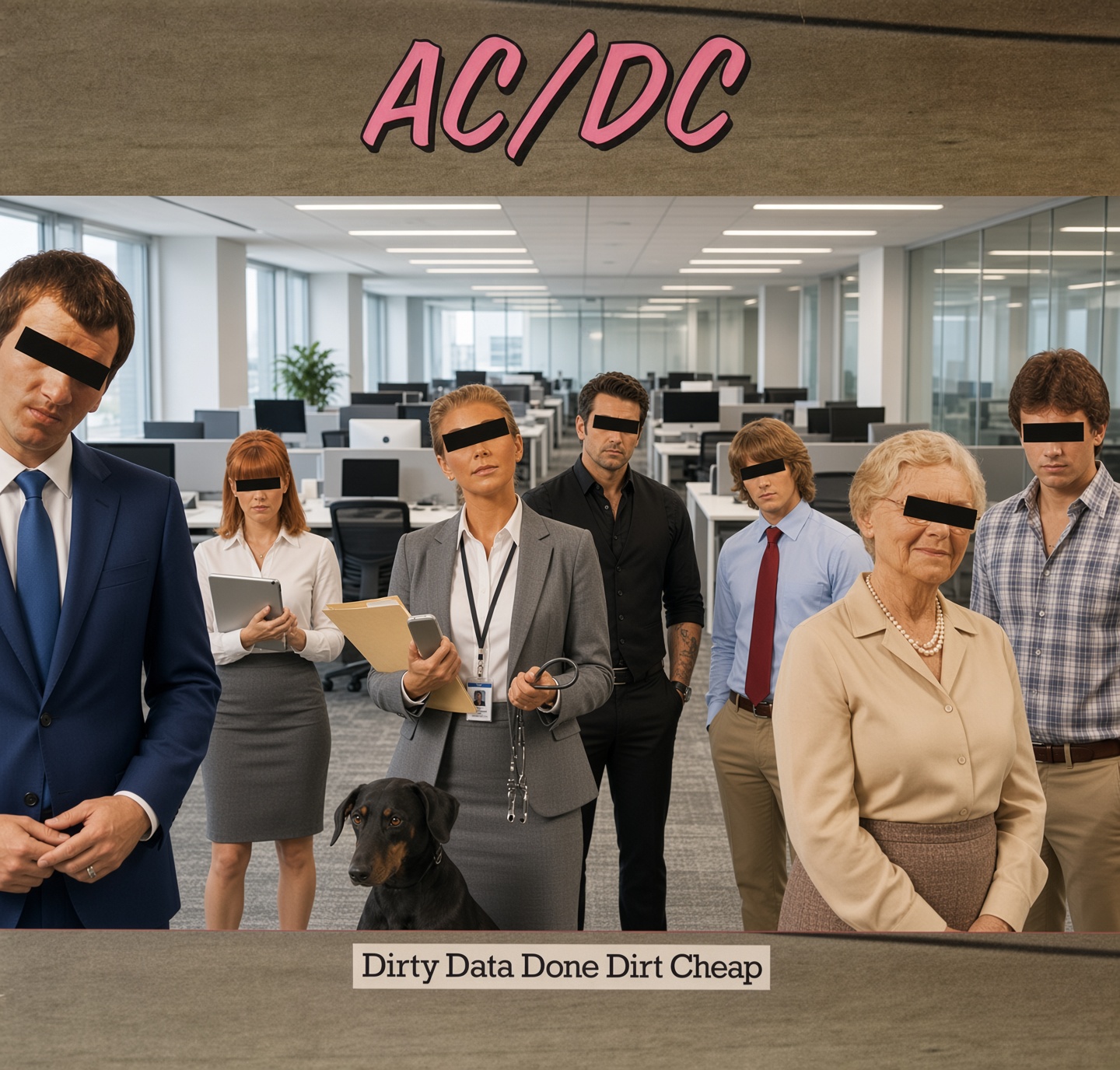
Dirty Data (Done Dirt Cheap)

AI image generated by Grok

The running joke amongst Generation X is that we don’t listen to music after the year 2000. We feel comfortable around the music we grew up with, so we prefer to stick to the music of the 80s, sometimes the 70s, and occasionally the 90s. That’s true for me, although in my case, while my musical taste stayed in the 80s, over the years it’s wandered over the globe sampling music from the decade. When I was in Europe I caught the last few years of European synth pop and Italo Disco. When I moved to Europe it was Celtic rock with Clannad. And just prior to COVID I was digging Soviet rock through Kino and Victor Tsoi.

So we Gen Xers regard it with some bemusement when the younger generation start rediscovering the artists we grew up with. First it was Millennials getting rickrolled and finding they actually liked Rick Astley, leading the ginger crooner to come out of retirement. More recently, the backdrop of the 80s in the Netflix show Stranger Things brought many 80s songs back into the spotlight, such as Kate Bush, David Bowie, and Metallica. The series finale, which dropped on New Year’s Eve 2025, did it again. Prince and the Revolution’s “Purple Rain” re-entered the Billboard Hot 100 at No. 27, its first appearance on the survey since Prince’s death in 2016. “When Doves Cry,” the other Prince song in the finale, was the one new listeners had to look up. It topped US and UK Shazam on January 2, 2026, in part because the title is barely in the lyric.

The thing that most interests me, however, are the reaction videos. Sometimes, new ears notice things that mine have overlooked.

Continue reading “Dirty Data (Done Dirt Cheap)”

Fire for Effect

My unit: 3rd Battalion, 13th Field Artillery. “Without fear, favor, or hope for reward.” (Source: public domain media)

I went to college on an ROTC scholarship. When I got my degree, I went into active duty service as a lieutenant. During my time on active duty, I served in a field artillery battalion, as part of the operations staff. That is where I learned how the Army actually delivers fire support

The most important thing to know about artillery is that it can’t win the battle alone. The Army relies on maneuver units (tanks and infantry) to seize or hold the battlefield. Artillery supports them by putting shells, rockets, or missiles on the enemy to suppress or destroy it.

How that support is organized is the interesting part. Artillery units usually belong to a division or a corps, but they do not always work directly for that headquarters. Sometimes they shoot higher-level missions such as SEAD (suppression of enemy air defenses) or counterfire (attacking the other side’s artillery). Sometimes they talk straight to a subordinate unit that is in contact and needs rounds now. And sometimes they have a primary mission and a secondary one stacked underneath it.

Continue reading “Fire for Effect”

The Stall

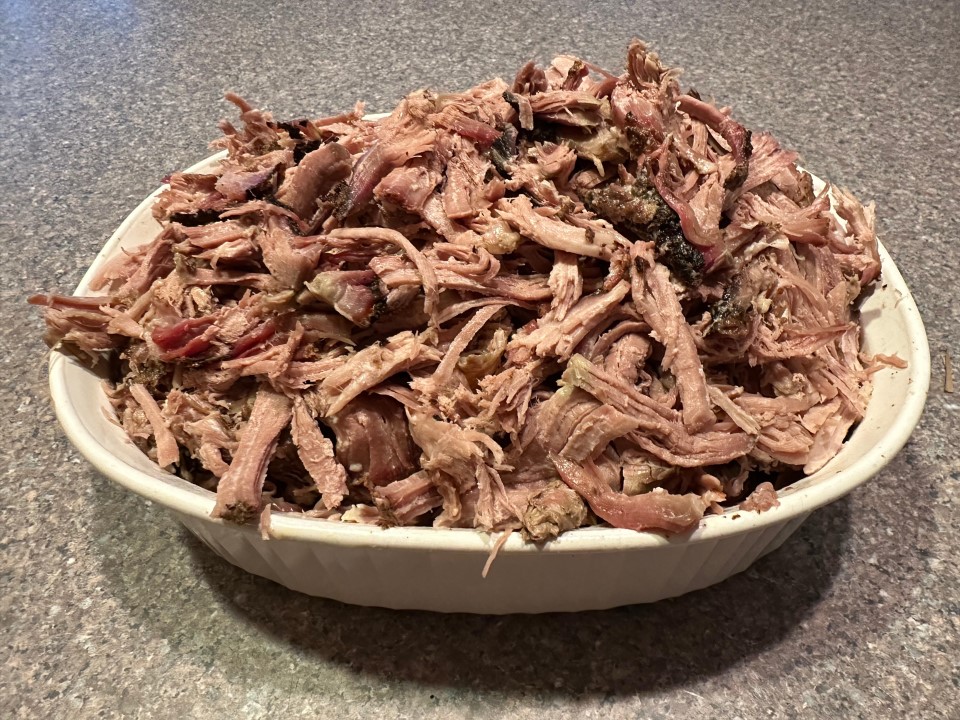
A while ago I was “gifted” with a gas grill. (It’s a long story—basically, someone I knew left behind the grill at my house and never came by to pick it up.) While I enjoy cooking, I’m usually not much of a grilling guy. However, I do have a fondness for barbecue. I lived in Kentucky for over two decades and traveled all over the South during that period. As a result, I was initiated into the finer details of pulled pork and smoked brisket.

As it turns out, there is actually a way to smoke with a gas grill; all you need is a smoker box to hold the wood chips, which you can get at any hardware store. So this past summer, I figured I’d put the gas grill to use and try my hand at smoking. It’s been a learning experience, and there were mistakes along the way. But with time and practice, I’ll get better at it.

Continue reading “The Stall”

Déjà Vu All Over Again

(Source: Wikimedia)

When I was finishing college in the early 90s, one of the trends that was starting to go viral back then was the concept of fractals. Although the term had been invented in the 70s by the mathematician Benoît Mandelbrot, it didn’t really take off in the public consciousness until about twenty years later, due in no small part to computer-generated graphics of the Mandelbrot set. Something about psychedelic imagery of Mandelbrot sets really clicked with the zeitgeist back then (largely thanks to boomers coming into their ascendancy and reliving some of their highlights from the 60s).

Continue reading “Déjà Vu All Over Again”

Ghosts in the Machine

We are Spirits in the Material World (Source: “Betty Boop in Snow White”, 1933)

Back in the 90s, while I was still on active duty, I joined a Compuserve online forum for active and veteran military members. I remember a post by an Air Force captain retelling an incident that happened in the skies over Iraq during Operation: Desert Storm.

This occurred during the initial combat missions while the Coalition Forces were establishing air supremacy. On one mission, the captain was flight commander for about half a dozen fighters. They were flying above the clouds when his wingman reported a radar contact underneath the clouds. The IFF (Identify Friend or Foe) transponders did not indicate that these were friendly planes, so his wingman recommended attacking (which, under the rules of engagement at that phase, was the correct response).

Something about the whole thing felt off to the captain. He instructed the flight to wait for visual confirmation.

Continue reading “Ghosts in the Machine”

Schrodinger’s Cat

I haven’t owned a television for the last fifteen years.

Call it an odd twist of fate, but I was gradually weaned off of television since college. A lot of people, especially in the younger generation, find the concept of life devoid of TV as inconceivable.

However, instead of television, I do watch a lot of YouTube, especially by independent content creators covering diverse fields such as pop culture, Slavic hardbass music, law, and cooking.  And since the Amber Heard/Johnny Depp trial, I’ve been watching a lot of livestreams about the entertainment industry.

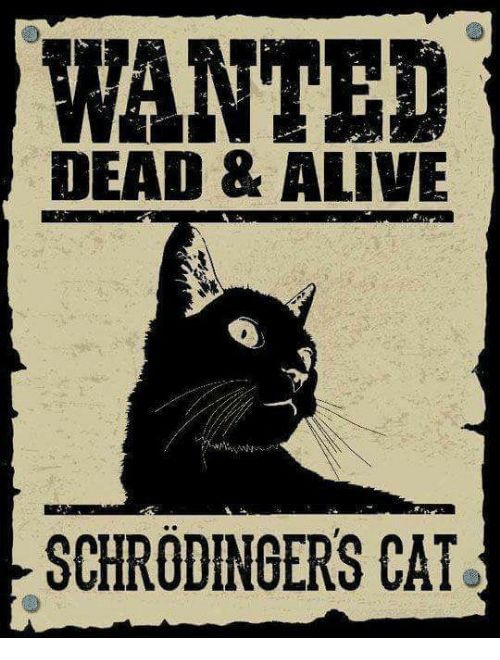
And one metaphor that’s been popping up lately is the analogy of Schrödinger’s Cat.

Continue reading “Schrodinger’s Cat”

Running on Empty

At the lowest point in my life, I had less than twenty dollars to my name.

It was 2004, and I had been unemployed for nearly a year. Due to the circumstances under which I was terminated, I was denied unemployment insurance, forcing me to live on meager savings that ran out within a couple of months. I ended up selling almost all of my gaming and science fiction books and toys on eBay just to have money to pay the mortgage. As for food and gas, I did the dumbest thing you could ever do: max out my credit cards and play the balance juggling game to stay solvent.

It was so bad, I almost got arrested for bouncing a check on a speeding ticket.

Continue reading “Running on Empty”