You can’t teach an old dog new tricks. Or can you?
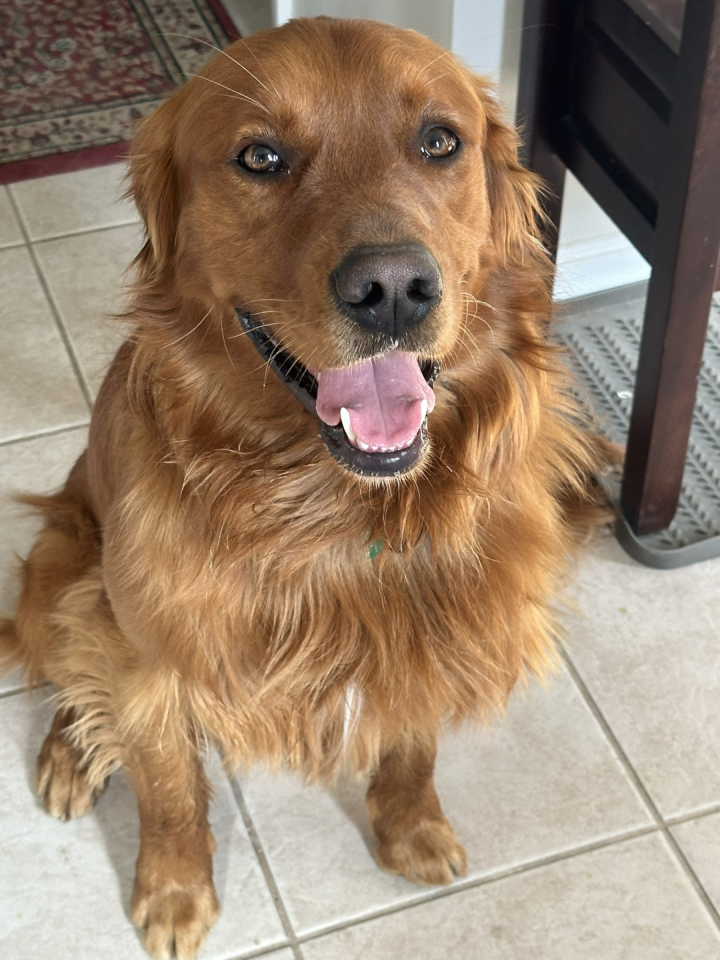
I’m about to find out with Rocky, my golden retriever. He’s a little over two years old—not “old” old, but old enough to have settled into a few habits that are getting him in trouble at the dog park.
I’ve started looking for trainers. The real test will not be whether he can learn a new behavior in the moment. It will be whether the new behavior is still there after the trainer leaves and the next dog shows up.
Workplaces have the same problem. The first time you clean something up, people can usually follow along. The harder part is whether the new pattern survives the next shift, the next quarter, or the next person who has been doing it the old way for years.
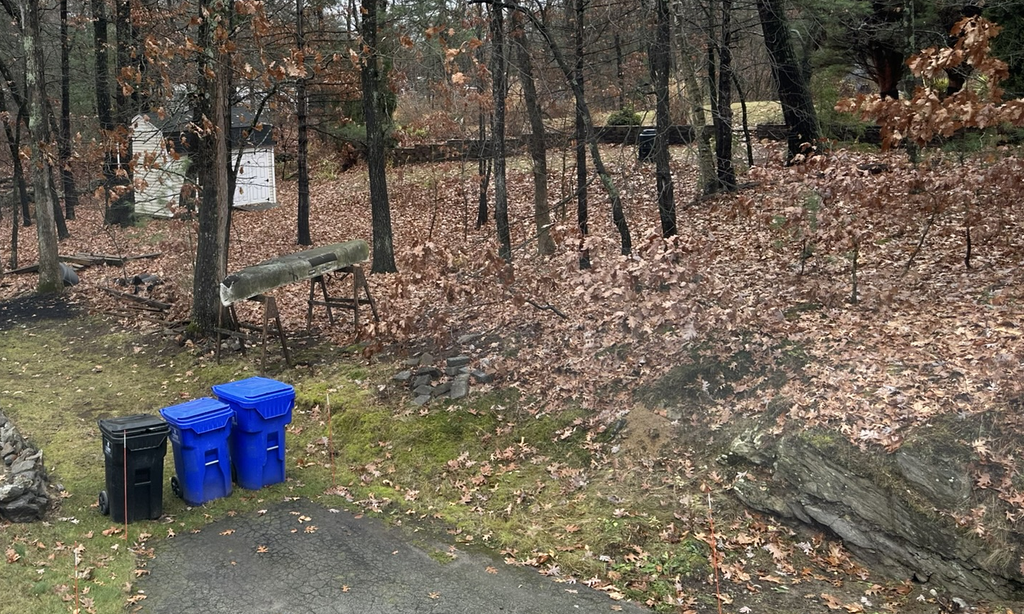
November in New England is usually a very busy time. After the Halloween candy has been dumped in the trash but before the Christmas decorations go up, the fall foliage starts coming down in earnest. Next thing you know, the yard is covered in leaves that have to be raked up and disposed of before the first snowfall. Even worse, the clocks move back an hour, so you don’t have a lot of time to do it before it gets dark.
As unpleasant as fall cleanup may be, it’s important to perform these tasks. Leaves left on the ground can suffocate your lawn and attract unwanted pests. (And if those leaves are close to the house, the pests inevitably find their way inside once the winter freeze arrives.) They also can be a safety hazard for slips and falls, as well as clog rain gutters. Cleanliness is more than an aesthetic; it’s actually a strong factor in upholding a high quality of life.
Mrs. Fiske Warren (Gretchen Osgood) and Her Daughter Rachel – John Singer Sargent, 1903
One of my favorite pastimes is visiting the Museum of Fine Arts in Boston. They have a vast collection of art from around the world, and they regularly rotate their displays, so you can always discover something new with repeated visits.
One thing that fascinates me there is the different styles of painting on view. In the European art wing you can see works by Impressionist painters such as Claude Monet, which use visible, broken brushwork that looks disjointed up close but vibrantly unified at a distance. Down the hall are Dutch Baroque masters such as Rachel Ruysch, whose fine brush strokes portray impressive detail up close, set against the black backgrounds of her still-life paintings.
Flowers in a glass vase on a marble slab – Raychel Ruysch, 1709
These style variations remind me of a concept in data modeling called grain. Grain, or granularity, is the level of detail represented by a single row in a table, such as a fact table in a data warehouse. It answers a fundamental question: what does one row in this table represent?
I learned the difference between being responsible and being accountable long before I ever worked with data. I hadn’t yet turned 23 when I arrived at my first duty assignment as a newly-minted lieutenant. I was the battalion chemical officer, responsible for contingency plans if weapons of mass destruction were ever used. Part of my responsibility was inventorying and maintaining the detection and decontamination equipment for a unit of 400 men. This included some very advanced electronics with low-radioactive isotopes. In today’s dollars all of it could be worth well over a million dollars. If something happened to that equipment, my career was on the line.
I saw the same lesson play out again when I was a manufacturing engineer. In manufacturing, the plant manager owns the line. If scrap rates climb or a shipment misses its window, the conversation starts and ends with that person. The process engineers, the quality technicians, and the operators on the floor are the ones who actually change the set points, quarantine the bad parts, and rewrite the work instructions. They are responsible for the work. The manager is accountable for the result.
Data isn’t any different, though looking at most corporate data org charts, you’d think we were all stuck in a mid-80s Tuesday night primetime loop—constantly asking, “Who’s the boss?” line-item by line-item while Tony Micelli and Angela Bower debate who actually holds the title.
A few years ago I asked a vice president how the business intelligence team I was on actually proved its value. His answer was straightforward: we made it easier for directors and executives to see the current state of the business and judge what was possible next.
That discussion stuck with me because it was so different from how most foundational work gets discussed. Data architecture, data governance, and the unglamorous parts of IT hygiene rarely get described in terms of decision quality or growth optionality. They get described as cost centers. When something is only a cost, the rational move is to minimize it, defer it, and hope the problem stays quiet.
The past few days of widespread vulnerabilities—especially the critical PHP issues that affected a large share of the web—made the pattern obvious again. Plenty of people have pointed out that basic patching, asset management, and maintenance were underfunded for years. The harder observation is why. Work that leadership can’t clearly connect to top-line outcomes tends to lose the budget fight, even when everyone agrees it is important in the abstract.
In my past life before data architecture, I used to be a manufacturing engineer in the automotive industry. At the time, the popular approach was Lean Manufacturing and the Toyota Production System, driven by Toyota’s massive success in the United States.
Lean was—and still is—about increasing value to the customer by reducing and eliminating work that doesn’t add meaningful value. This spawned many tools and practices to surface inefficient habits. One that stayed with me was the concept of “going to gemba.” In Japanese, gemba means “the real place” where work actually happens. In practice, this meant that managers and engineers left the office and went to the shop floor. There they simply observed: stood and watched the work happening, and asked questions of the line operators in a curious and respectful manner. No decisions were made on the floor. Leadership took what they had learned back to the office and used those lessons to shape operational plans.
This concept came to mind as I read this post on LinkedIn:
The running joke amongst Generation X is that we don’t listen to music after the year 2000. We feel comfortable around the music we grew up with, so we prefer to stick to the music of the 80s, sometimes the 70s, and occasionally the 90s. That’s true for me, although in my case, while my musical taste stayed in the 80s, over the years it’s wandered over the globe sampling music from the decade. When I was in Europe I caught the last few years of European synth pop and Italo Disco. When I moved to Europe it was Celtic rock with Clannad. And just prior to COVID I was digging Soviet rock through Kino and Victor Tsoi.
So we Gen Xers regard it with some bemusement when the younger generation start rediscovering the artists we grew up with. First it was Millennials getting rickrolled and finding they actually liked Rick Astley, leading the ginger crooner to come out of retirement. More recently, the backdrop of the 80s in the Netflix show Stranger Things brought many 80s songs back into the spotlight, such as Kate Bush, David Bowie, and Metallica. The series finale, which dropped on New Year’s Eve 2025, did it again. Prince and the Revolution’s “Purple Rain” re-entered the Billboard Hot 100 at No. 27, its first appearance on the survey since Prince’s death in 2016. “When Doves Cry,” the other Prince song in the finale, was the one new listeners had to look up. It topped US and UK Shazam on January 2, 2026, in part because the title is barely in the lyric.
The thing that most interests me, however, are the reaction videos. Sometimes, new ears notice things that mine have overlooked.
My unit: 3rd Battalion, 13th Field Artillery. “Without fear, favor, or hope for reward.” (Source: public domain media)
I went to college on an ROTC scholarship. When I got my degree, I went into active duty service as a lieutenant. During my time on active duty, I served in a field artillery battalion, as part of the operations staff. That is where I learned how the Army actually delivers fire support
The most important thing to know about artillery is that it can’t win the battle alone. The Army relies on maneuver units (tanks and infantry) to seize or hold the battlefield. Artillery supports them by putting shells, rockets, or missiles on the enemy to suppress or destroy it.
How that support is organized is the interesting part. Artillery units usually belong to a division or a corps, but they do not always work directly for that headquarters. Sometimes they shoot higher-level missions such as SEAD (suppression of enemy air defenses) or counterfire (attacking the other side’s artillery). Sometimes they talk straight to a subordinate unit that is in contact and needs rounds now. And sometimes they have a primary mission and a secondary one stacked underneath it.
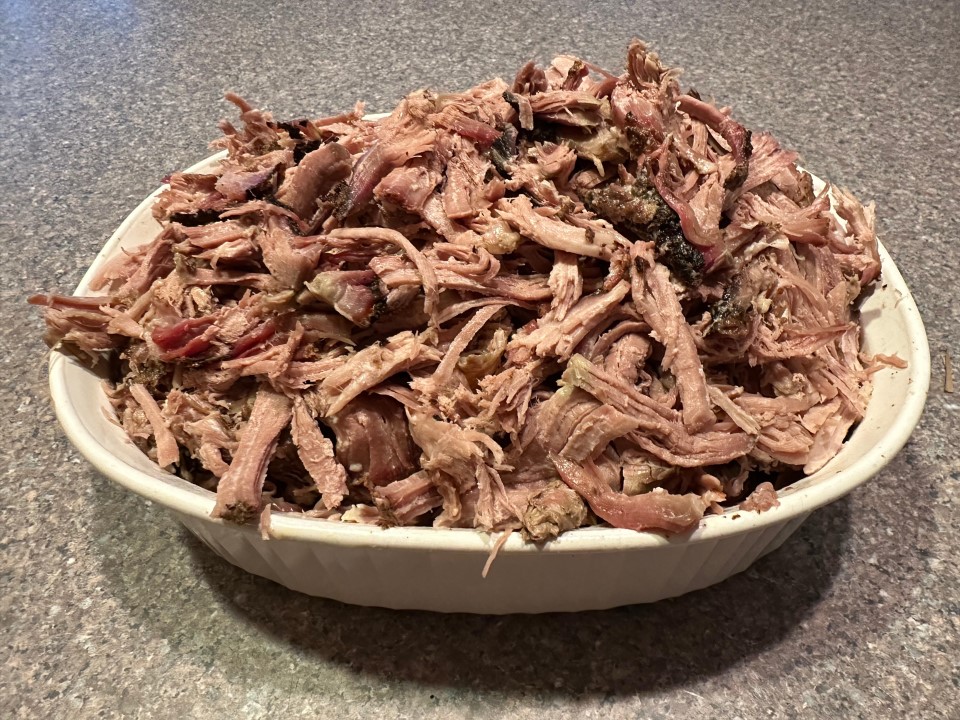
A while ago I was “gifted” with a gas grill. (It’s a long story—basically, someone I knew left behind the grill at my house and never came by to pick it up.) While I enjoy cooking, I’m usually not much of a grilling guy. However, I do have a fondness for barbecue. I lived in Kentucky for over two decades and traveled all over the South during that period. As a result, I was initiated into the finer details of pulled pork and smoked brisket.
As it turns out, there is actually a way to smoke with a gas grill; all you need is a smoker box to hold the wood chips, which you can get at any hardware store. So this past summer, I figured I’d put the gas grill to use and try my hand at smoking. It’s been a learning experience, and there were mistakes along the way. But with time and practice, I’ll get better at it.
If you aren’t prepared for what life can throw at you, you may be in for a great fall.
As I’m sure everyone understands all too well by now, life has a way of throwing monkeywrenches into the system. If there’s anything that’s been consistent about 2020, it’s that every month seemingly has a new surprise to spring upon humanity.
Instead of traveling over smooth ground, we are on precipitous terrain. Any kind of long term forecast is currently impossible.
When chaos is the order of the day, you must be able to make and act on snap judgements without overcommitting on your previous decision. How do you do that?