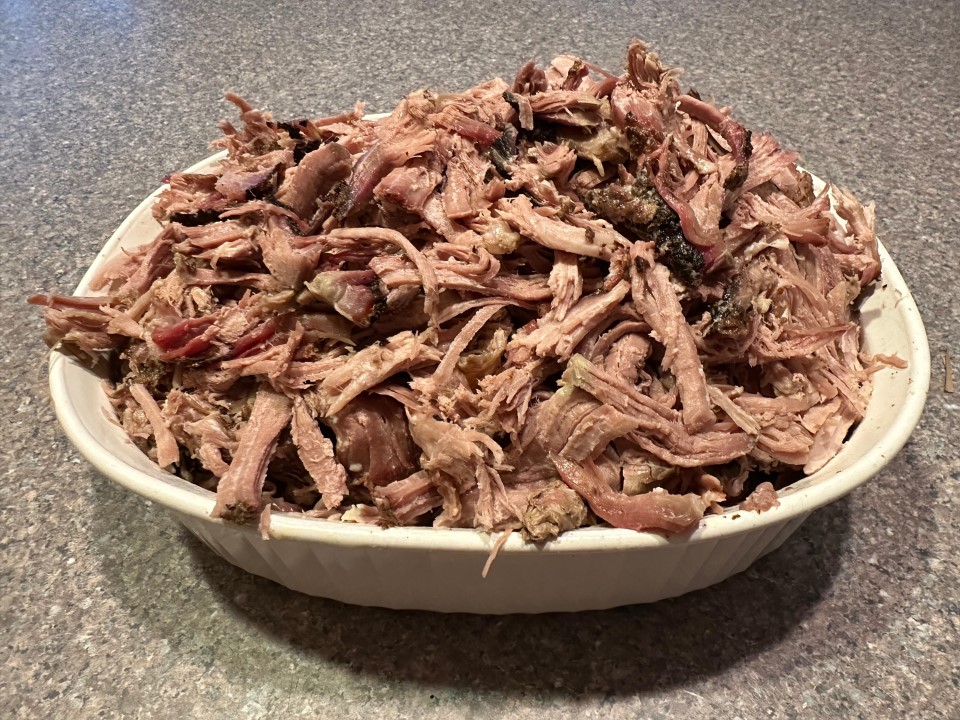
A while ago I was “gifted” with a gas grill. (It’s a long story—basically, someone I knew left behind the grill at my house and never came by to pick it up.) While I enjoy cooking, I’m usually not much of a grilling guy. However, I do have a fondness for barbecue. I lived in Kentucky for over two decades and traveled all over the South during that period. As a result, I was initiated into the finer details of pulled pork and smoked brisket.
As it turns out, there is actually a way to smoke with a gas grill; all you need is a smoker box to hold the wood chips, which you can get at any hardware store. So this past summer, I figured I’d put the gas grill to use and try my hand at smoking. It’s been a learning experience, and there were mistakes along the way. But with time and practice, I’ll get better at it.
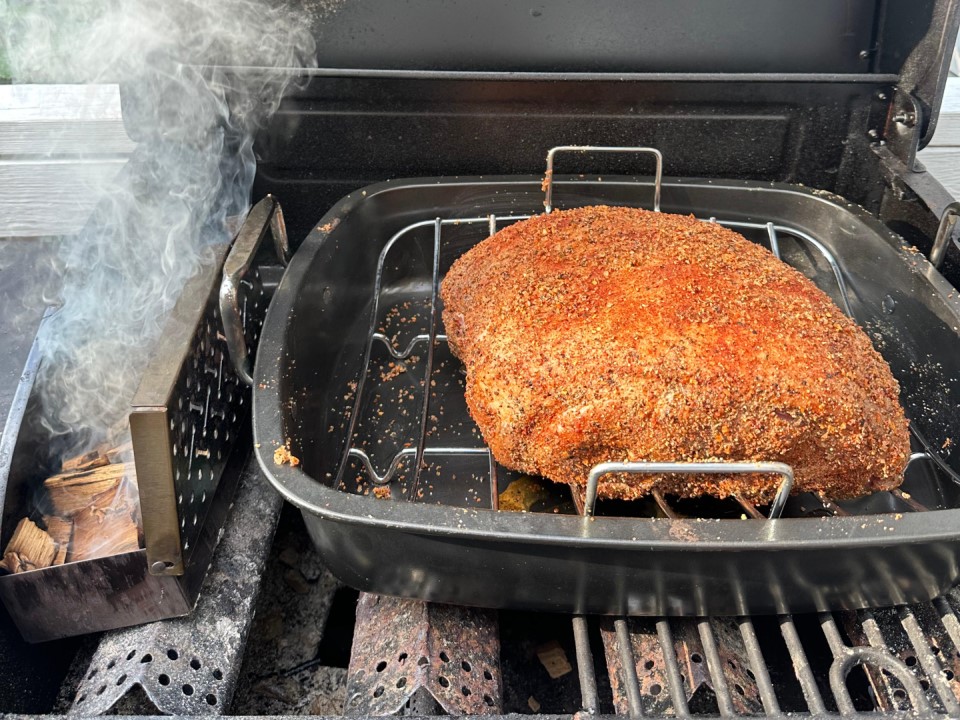
One thing I’ve learned in my experimentation with BBQ is the concept of “the stall.” When you’re smoking meat, you want to get your roast to an internal temperature around 200°–205° F. However, at some point between 140°–160° F, the temperature stops rising and plateaus. What’s actually happening is that as the meat heats up, moisture rises to the surface and starts evaporating. This evaporation actually cools the meat in the same way that sweating does. And in a smoker, you’re cooking low and slow, so what happens at the Stall is that the rate of cooling matches the rate of heating at low temperature.
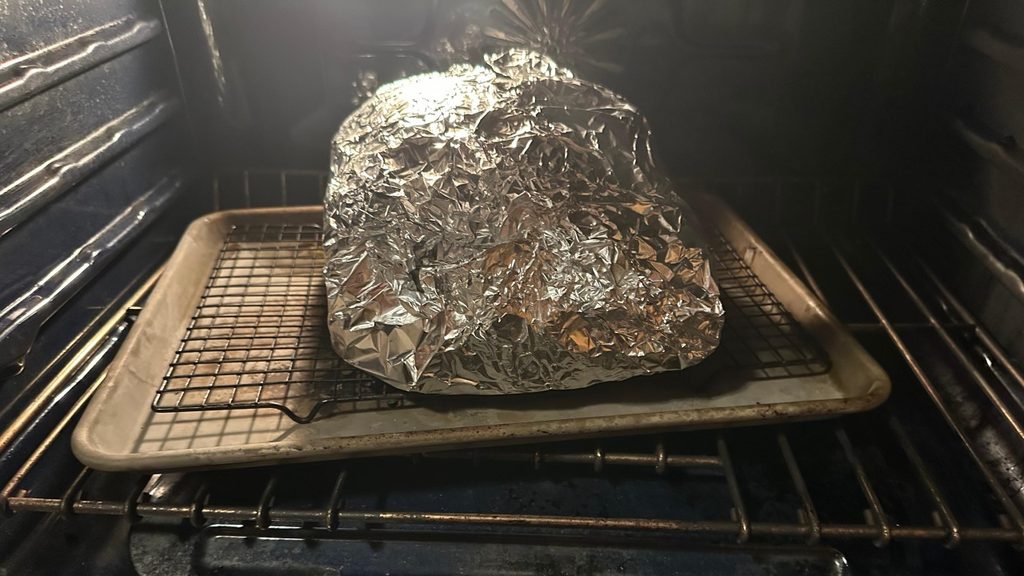
To get past the Stall, what a lot of BBQ experts will do is wrap the meat in aluminum foil or butcher paper. Foil traps heat and steam and pushes the cook-through faster; butcher paper holds heat while still letting some vapor escape.. Some have even recommended transferring it out of the smoker and into an oven to let it finish. At that temperature, they argue, the meat has already absorbed as much smokiness as it can, so there’s no point in wasting more wood on the roast. Whatever you do, the point remains that slow-roasting in a smoker only gets you to a certain temperature, and to get past that, you have to change up your method in order to cook the meat to perfection.
During my data engineering career, I have often been brought in to deal with a legacy data platform that has reached its own Stall. Sometimes it’s a consultant or contractor who didn’t fully understand the enterprise, built a flawed system, and left when the contract was done. Other times it was a startup that built its system on the fly, pivoting the model to meet business changes and skipping the documentation to meet a delivery date. Regardless of the reason, what I was called in to deal with was a giant mess that simply couldn’t grow with the business.
When faced with this problem, I found myself asking the same two questions: what kind of drugs were the developers on when they built this, and are they legal in California?
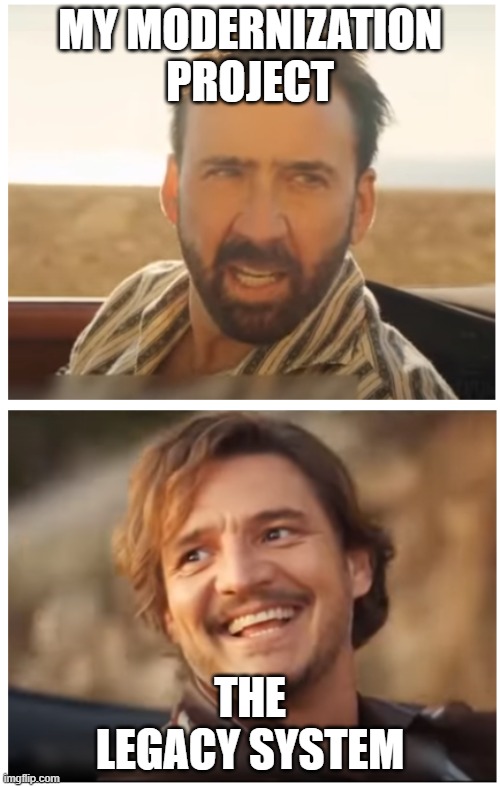
That may be a little bit harsh. To be fair, at the time those legacy systems were being built, the organizations in question must have been limited by constraints: either on the level of knowledge, or the amount of time or resources available. They made the best decisions they could under the circumstances, but by the time I came around, it just wasn’t working anymore. We needed a new way of working.
I remember two circumstances where this occurred: In one case, a contractor had built an end-of-day batch processing system for an online payments platform. Because of the importance of this system to the overall business, no one else was permitted to work on the code. However, the contractor moved on to bigger and better projects, leaving a massive black box no one dared to open until the problem became too big to ignore. It also didn’t help that the level of expertise wasn’t up to the task of cracking the code.
In the end, what my team did was build a new system, on a separate architecture and infrastructure. It wasn’t easy, and we met some initial resistance. But once we got the leadership behind what we were doing, we were able to deliver some meaningful results.
The second case I only understood later, that I was the one still running the old playbook. In the next job after this, I was building an ETL platform for a gaming company managing several casinos. In that project, the team I was on built a data warehouse to feed the corporate business intelligence platform, using a metadata-driven process to manage the extensive data model. At the time, we were only dealing with data sources from other databases, all of which used the same enterprise software, across several independent properties.
But as the platform gained traction and started demonstrating value to corporate leadership, we were asked to integrate data from other sources: XML-based SOAP APIs, text files, JSON-based REST APIs, and Excel spreadsheets. I ended up building a lot of new ingestion patterns, a place to land semi-structured data, and metadata to keep it traceable.
In hindsight, I realize now that I was reinventing the data lake. If I had the chance to do it over again, I’d have persuaded the leadership to invest in a lakehouse platform.
“What got you here won’t get you there,” said Marshall Goldsmith wrote – and then later built a bestselling book around the line. The main idea he wrote about was that the habits, skills, and behaviors that helped you achieve your current level of success are often the exact things holding you back from the next level.
In other words, you’ve hit the Stall. It’s not a failure of the old method. It’s the point where the old method has done all it can. Past that, you change the wrap — or you sit at 155°F all afternoon.